
If you are looking for a proper company valuation method then you need to check out the company valuation model on Excel. This is a great valuation model because it is simple and to the point. If you ever need to compute company value for your company or another company, simply use the valuation model and it will be extremely easy. Download our company valuation here.
This company valuation model uses a specific company valuation method in order to get the job done. Let us take a look at the specifics of the company valuation model.
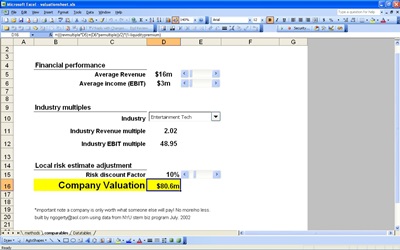
For this valuation method we must know the financial performance of the company. The company valuation method utilizes the average revenue and the average income (EBIT) in order to make calculations. In addition, to get the company valuation you must supply the industry of the company and the risk discount factor.
This will allow you to get a accurate valuation using this method! Why is this so useful? Because, you will need to tell any potential investors what the value of your company is. While complicated work can also be done, this is a simple technique that can be used to get a rough figure. This figure can talked about at any investor events and can really help you promote your business.
The company valuation method is standardized and it has been used many times in the past, successfully. This is why it will definitely work for your or any other company. Simply enter the information and you will get a company valuation that will be very accurate and informative.
Getting the right company valuation figures is crucial because you never want to be misled when it comes to a company’s worth. That is why using a calculating tool such as this one is such a great option.
Related Templates:
- Cash Flow ROI Valuation Model Audit
- Bond Valuation
- Milk Vending Business Model
- Business Valuation Calculator
- Stock Valuation
View this offer while you wait!